
Argentina eSIM — Northwest
eSIMs for Northern Argentina: Salta, Jujuy, Cafayate & the Quebrada — Coverage, Plans & Hotspot Tips
Choose the right eSIM for Salta city and the high-altitude routes to Cafayate, Purmamarca and Tilcara. This guide focuses on reliable data, hotspot rules, and what actually works on remote quebrada roads.
Quick picks: Short trips: regional/global eSIM (Airalo/Nomad) for instant arrival. Multi-week or remote routes: local operator eSIM (Claro or Movistar) for best rural coverage and cheaper top-ups. Bring a power bank for tethering.
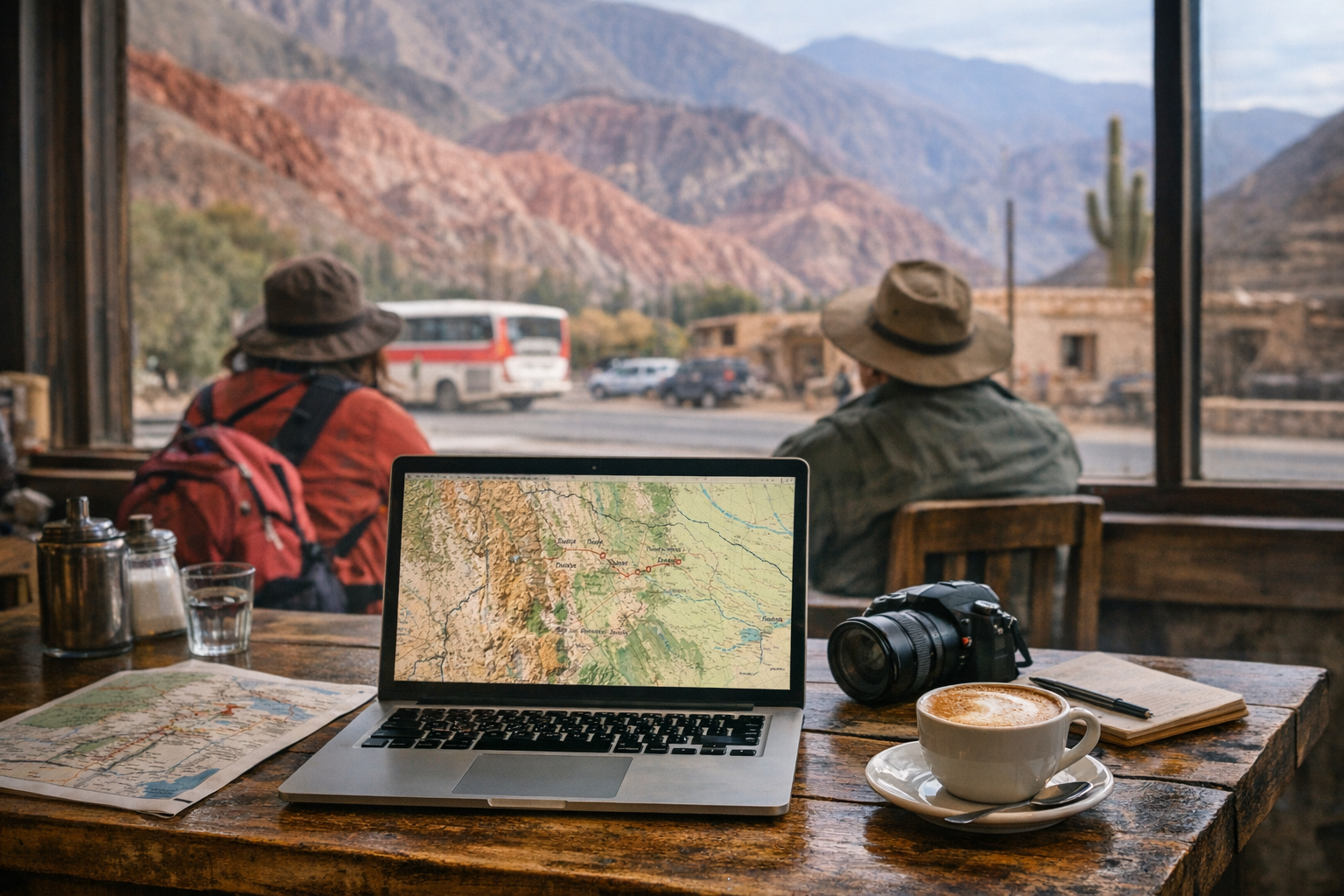
Performance
Performance & Coverage Notes — what to expect
Field reports and operator maps indicate Claro usually gives the most consistent signal on Calchaquí Valleys and many high-altitude routes.
Movistar provides reliable 4G in Salta city and popular stops like Cafayate, Purmamarca and Tilcara; coverage thins on dirt roads.
Airalo/Holafly/Nomad get you online on arrival but may route through MVNOs — expect lower priority and possible tether caps.
Quebrada del Toro and some pass crossings commonly fall to 3G or no service; offline maps recommended.
Quick summary
Best picks by travel style
Short city or weekend (3–5 days): buy a regional/global eSIM (Airalo Argentina pack or South America pack) before arrival for immediate connectivity.
Multi-week or remote routes: get a local operator eSIM (Claro or Movistar) — cheaper top-ups, better rural coverage, and clearer tethering rules.
Heavy tethering or laptop work: local prepaid eSIMs or physical SIMs from Claro/Movistar/Personal; buy larger data bundles or top-ups on site.
Short city stay
3–5 GB should cover maps, WhatsApp and photo uploads for 3–5 days.
Day-trip users
5–10 GB for navigation and frequent photo uploads across multiple day trips.
Remote or heavy tethering
15–30+ GB or a local SIM with top-up ability; tethering drains battery fast.
Coverage deep dive
Salta, Cafayate, Purmamarca and the quebrada routes
Salta city: consistent 4G/LTE from all three MNOs (Claro, Movistar, Personal). Expect good speeds and 5G limited to city pockets.
Cafayate & Calchaquí Valleys: towns have 4G; the scenic twisting route between Salta and Cafayate has intermittent coverage — Claro typically reports better continuity on operator maps and traveler reports.
Quebrada de Humahuaca (Purmamarca, Tilcara, Humahuaca): main towns covered on 4G but side roads and high passes drop to 3G or nothing; plan offline routes for long stretches.
Real-world signal
Reddit/traveller threads commonly show gaps on dirt roads despite operator maps showing 'coverage'.
5G availability
Do not rely on 5G outside Salta city; it's not a practical factor for quebrada travel.
Plan comparison checklist
What to compare in live eSIM plans
Coverage vs map — compare operator maps with recent traveller reports for specific towns and routes you’ll use.
Price, data allowance and validity — watch for aggressive per-day pricing on some global packs versus cheaper local top-ups.
Tethering & APN — confirm hotspot policy; local MNOs generally allow tethering for personal use but global eSIMs may restrict it or apply slow-speed caps.
Activation & support
Check activation window and support language — some global sellers offer 24/7 chat; local operators may only support Spanish hours.
Refunds & top-ups
Global eSIMs often have limited refunds; local operator eSIMs can be topped up in-country via apps or kiosks.
Activation & on-ground tips
Practical setup, APN and battery tips
Buy a global pack (Airalo/Holafly/Nomad) pre-trip for arrival connectivity; then swap to a Claro/Movistar eSIM if staying longer or heading remote.
Keep a spare physical SIM or a second eSIM profile if you need simultaneous numbers for calls and data.
APN: local operator eSIMs usually provision automatically; for tethering some users need to set APN manually — save APN strings from the operator site or help desk.
Battery: tethering can cut phone battery life quickly. Use a 10,000–20,000 mAh power bank on day trips, and avoid continuous high-bandwidth uploads on the move.
Buypoints
Salta airport and city kiosks sell Claro and Personal SIMs; sometimes eSIM activation in-shop is available.
Offline maps
Download Google Maps or Maps.me offline tiles for Calchaquí Valleys and Quebrada stretches where coverage drops.
FAQ & troubleshooting
Common questions travelers ask
Can I tether with Airalo/Holafly/Nomad? Some packs allow tethering, others forbid or throttle it. Read the plan hotspot policy before purchase.
Is buying a local eSIM worth it? Yes for multi-week trips or heavy data use — better coverage priority and cheaper top-ups than most global eSIMs.
What if coverage drops mid-route? Use offline navigation, cache directions before leaving town, and have a backup SIM or eSIM for emergency messages.
Switching profiles
You can delete and re-install many eSIMs but keep QR/activation codes until you confirm service works.
Support in Spanish
Local operators' support is primarily Spanish; global eSIM providers often offer English chat support.
Comparison
Operator eSIM vs Global eSIM at a glance
| Local operator eSIM (Claro/Movistar/Personal) | Global eSIM (Airalo/Holafly/Nomad) |
|---|---|
| Best rural coverage and cheaper in-country top-ups; tethering normally permitted for personal use; Spanish support. | Instant activation before arrival; may route via MVNO partners, lower priority and possible hotspot restrictions; English support common. |
| APN usually auto-provisioned; physical kiosks and apps let you top up on the go. | Easy checkout and install via QR; refunds and reissues depend on vendor policy. |
| Longer validity and local bundles for heavy data; buy at airport or city kiosks or online with local docs. | Convenient for short stays and immediate connectivity; cost per GB often higher for large volumes. |
Pro tips
Practical tips
Buy a small global eSIM before arrival to have maps and messages on landing, then switch to a local eSIM if staying longer.
Keep a second eSIM profile or a physical SIM slot free if you need simultaneous numbers for local services.
Download offline maps and cache directions for routes like Salta–Cafayate and Purmamarca–Tilcara where coverage drops.
Bring a quality power bank — tethering materially increases battery drain on day trips.
Before buying, read the eSIM seller’s hotspot policy and recent traveller comments (Reddit/travel threads) for real-world behavior.
Live picks
Top package recommendations (by traveler intent)
Saily
Argentina 1GB 7 days
Hidden caveat: Local number. SIMs include a local number but registration is mandatory and tied to your ID; unregistered SIMs risk deactivation.
Saily
Argentina 3GB 30 days
Hidden caveat: Local number. SIMs include a local number but registration is mandatory and tied to your ID; unregistered SIMs risk deactivation.
Saily
Argentina 5GB 30 days
Hidden caveat: Local number. SIMs include a local number but registration is mandatory and tied to your ID; unregistered SIMs risk deactivation.
Saily
Argentina 10GB 30 days
Hidden caveat: Local number. SIMs include a local number but registration is mandatory and tied to your ID; unregistered SIMs risk deactivation.
Saily
Argentina 20GB 30 days
Hidden caveat: Local number. SIMs include a local number but registration is mandatory and tied to your ID; unregistered SIMs risk deactivation.
Explore more
Find the right eSIM for your trip
Compare live Argentina and regional packs, check hotspot policy, and pick a backup. For multi-week or remote travel prefer local operator eSIMs (Claro/Movistar) and keep a global pack as fallback.
Related guides
More Argentina reading
Argentina eSIM for Road Trips: Buenos Aires, Patagonia, Iguazú & Mendoza — Claro vs Movistar vs Personal and Top eSIM Providers
A traveler-first eSIM guide for Argentina: which networks cover Buenos Aires, Mendoza, Patagonia and Iguazú, how tethering behaves, and whether to buy before you arrive.
Open guide
Argentina eSIM Guide: Best Options for Buenos Aires, Mendoza, Patagonia & Remote Work
How to pick and activate an Argentina eSIM for city trips, Patagonia road trips or month‑long remote work. Coverage realities, hotspot rules and vendor tradeoffs.
Open guide