
France eSIM guide
Best eSIM for France: Paris, Nice & TGV Travel — Complete Guide
Choose the cleanest, most reliable eSIM for Paris, the French Riviera and TGV routes. We distill network coverage, tethering rules and the activation steps you actually need.
Quick take: Orange-based plans are safest for long-distance & rural routes including many TGV corridors. SFR and Bouygues excel in city 5G. Reseller eSIMs are convenient but check hotspot and top-up limits before buying.

Performance
Quick performance notes
Orange maps and traveler reports show the most consistent handovers on long-distance routes and better 4G in rural areas.
SFR and Bouygues compete for top urban 5G and high city speeds — ideal for streaming and crowded urban use.
Free often undercuts price; multiple traveler threads indicate weaker coverage in Provence, Dordogne and some TER routes.
Resellers are easy to buy and activate but may limit tethering, disallow top-ups, or apply roaming-specific caps—read fair-use rules.
Setup & Activation
Activate your eSIM: practical steps for iPhone and Android
Buy while at home to avoid local queues. Most sellers deliver a QR code or activation URL you can install before leaving.
On iPhone, scan the QR or use the provider app; on Android use the carrier app or eSIM QR. Some older Androids have limited eSIM support—check device compatibility.
Remember many phones allow only one active eSIM profile plus a physical SIM; test your setup before departure.
iPhone & Android steps
Scan provider QR or install via app. Label profiles (e.g., 'France Data') and set data/voice priorities in Settings.
Dual‑SIM tips
Use eSIM for data and a local/roaming physical SIM for calls, or keep home SIM active for two‑factor codes. Confirm which profile is set for data.
Hotspot & Tethering
Tethering rules, speeds and battery tips
Most French MNOs allow personal hotspot on native plans. Reseller eSIMs often permit tethering but may throttle or apply a fair-use cap—check the policy page.
For remote work, prefer operator (Orange/SFR/Bouygues) plans or reseller plans that explicitly list unlimited hotspot. Expect speed caps after heavy use.
When tethering, watch battery drain and security on public networks; use WPA2 passwords and consider a power bank for long sessions.
Fair use & throttling
Unlimited-sounding reseller plans can be speed-capped after a threshold; operator SIMs typically have clearer fair-use rules and top-up options.
Power & security
Use a quality power bank for hotspot-heavy days and set a strong WPA2 password. Avoid open tethering in public where possible.
Coverage & Transport
TGV, regional trains and rural driving
TGVs travel at high speed so cell handovers are frequent; Orange generally provides the most consistent connection on reports from travelers and coverage maps.
Many TGVs now include onboard Wi‑Fi, but speed and reliability vary — don't rely on it for critical work. TER regional services and rural roads in Provence/Loire can drop to 3G in spots.
For multi-region road trips, choose a plan with national coverage on Orange or check multi‑operator roaming plans that use local MNOs.
TGV specifics
Expect intermittent cellular handovers; Orange tends to be steadier. Onboard Wi‑Fi exists on many trains but can be slow under load.
Rural & coastal
Coastal and mountainous stretches (Provence, Dordogne, parts of Loire) may fall back to 3G; keep offline maps as backup.
Compare Plans
What to check when comparing live eSIM offers
Compare price-per-GB for your trip length, whether plans are France-only or EU/multi-country, and whether 5G is included.
Check activation windows, auto-expiry, refill options and English support. Live user reports (Reddit traveler threads and carrier docs) are useful for real-world behavior.
Confirm explicit hotspot/tethering policy and any post‑threshold throttling before buying if you plan to hotspot often.
Key checklist
Price/GB, validity, hotspot policy, 5G access, top-up ability, support language and refund terms.
Real-world signals
Look for recent traveler reports and carrier policy pages; provider speed claims should be treated as best-case.
Troubleshooting
Quick fixes for common activation & tethering issues
If no service after activation: toggle airplane mode, reboot, check APN settings or reinstall the eSIM profile. Confirm the profile is set as the active data SIM.
If hotspot won't start: confirm provider allows tethering, verify cellular data is enabled for that profile and check for carrier-imposed APN or tethering blocks.
If QR won't scan on arrival, most sellers provide a manual activation URL or support chat—save that link before you travel.
No service on arrival
Reboot, toggle airplane mode, check eSIM is enabled for data and verify network selection is set to automatic.
Hotspot not working
Confirm tethering is allowed by the plan, check APN settings, and ensure data is routed through the eSIM profile.
Comparison
Operator vs reseller at a glance
| Provider | When to choose |
|---|---|
| Orange (native) | Choose for cross-country road trips, TGV and reliable rural 4G/5G handovers. |
| SFR / Bouygues | Choose for best city 5G speeds and competitive urban plans in Paris, Nice and Lyon. |
| Free Mobile | Choose if price-sensitive and staying mostly in major cities; avoid for remote/rural travel. |
| Airalo / Holafly / SimOptions | Choose for pre-departure convenience, immediate activation and multi-country passes; verify hotspot & refill policies. |
Pro tips
Practical tips for travel in France
Install and test your eSIM before departure; label profiles and set data usage limits.
If you need reliable hotspot for work, prefer an operator SIM (Orange/SFR/Bouygues) rather than a no‑refill reseller plan.
Carry a small power bank for long hotspot sessions; tethering can drain phones fast.
For TGV travel, assume intermittent coverage—use onboard Wi‑Fi as a supplement but not a guarantee.
Save carrier support links and any manual activation URL in your notes in case QR scanning fails.
Live picks
Top eSIM packages to consider
Saily
France 1GB 7 days
Hidden caveat: French local numbers. Included with most prepaid and postpaid SIMs and eSIMs; in‑store registration may require ID.
Saily
France 3GB 30 days
Hidden caveat: French local numbers. Included with most prepaid and postpaid SIMs and eSIMs; in‑store registration may require ID.
Saily
France 5GB 30 days
Hidden caveat: French local numbers. Included with most prepaid and postpaid SIMs and eSIMs; in‑store registration may require ID.
Saily
France 10GB 30 days
Hidden caveat: French local numbers. Included with most prepaid and postpaid SIMs and eSIMs; in‑store registration may require ID.
Saily
France 20GB 30 days
Hidden caveat: French local numbers. Included with most prepaid and postpaid SIMs and eSIMs; in‑store registration may require ID.
Explore more
Ready to pick a plan?
Compare live eSIM offers for France and check hotspot rules, 5G access and top-up options before purchase.
Related guides
More France reading

Best eSIMs for France (Paris, Provence, Riviera, Lyon): Coverage, Hotspot & Tethering Guide
Practical guide to picking an eSIM for France — network choices, tethering policies, rural and mountain coverage, and the best buys by itinerary.
Open guide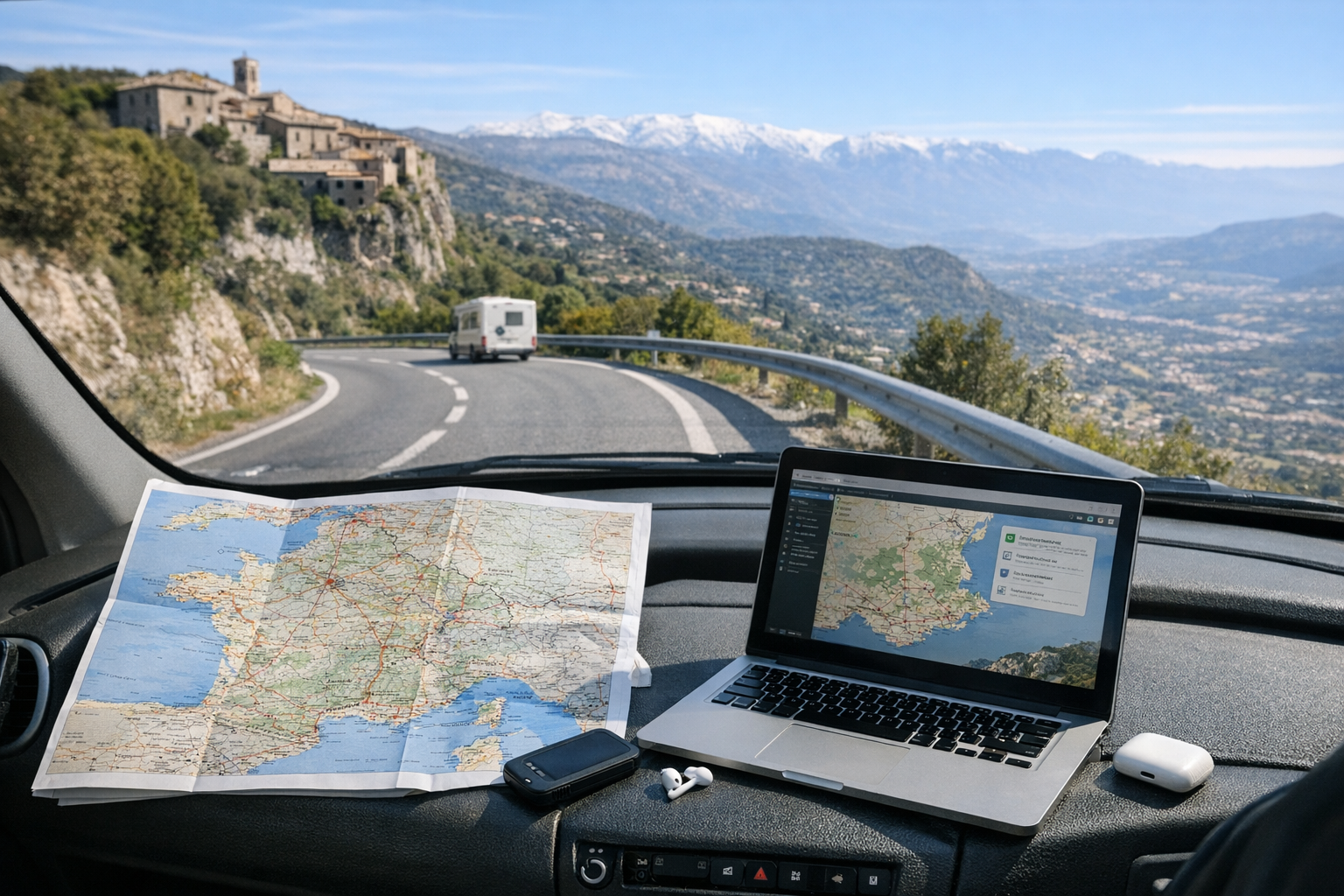
France road‑trip eSIM guide: Best eSIMs for Paris → Nice → Provence (hotspot, coverage, activation)
Quick, practical guidance for picking and activating an eSIM for a 7–14 day Paris→Nice road trip. Focus: hotspot for multiple devices, city & rural coverage, Alpine detours, and activation/APN tips.
Open guide